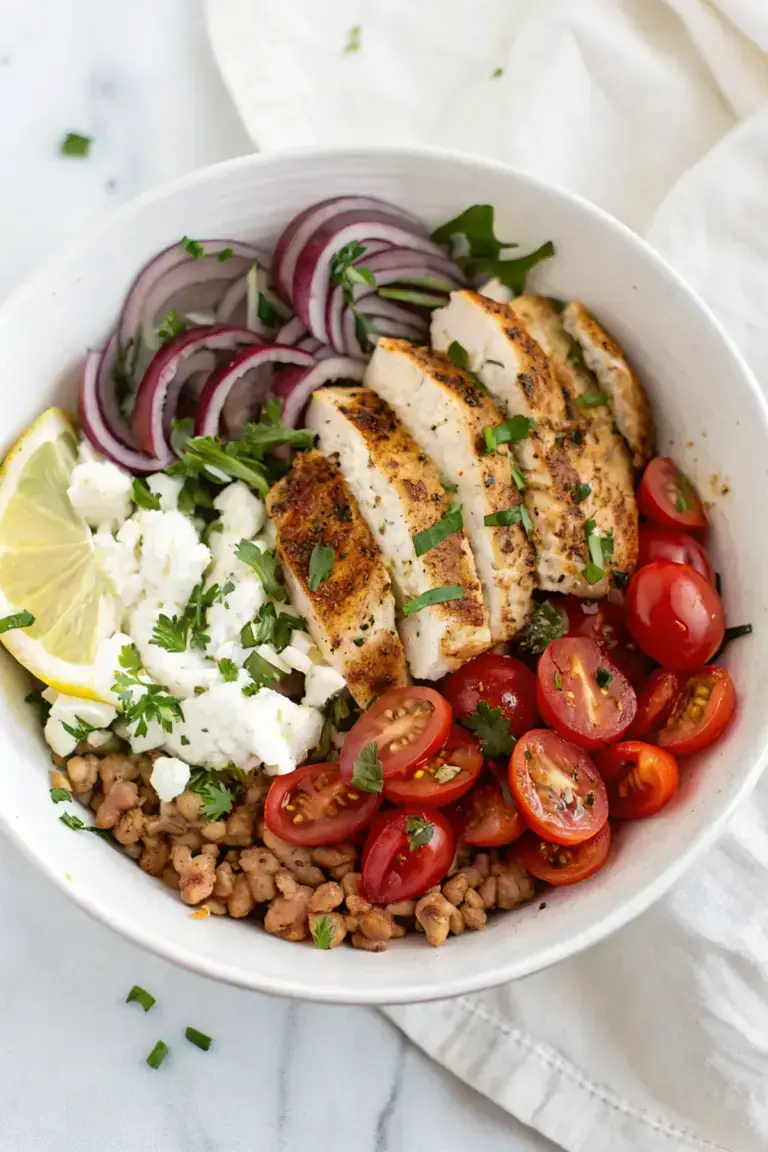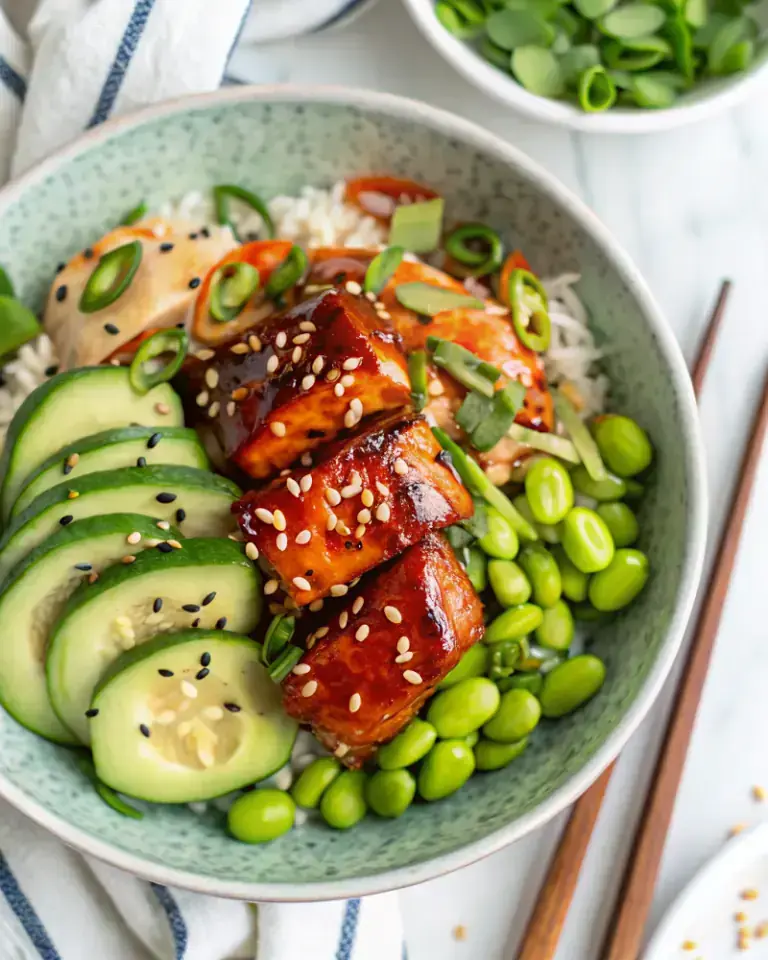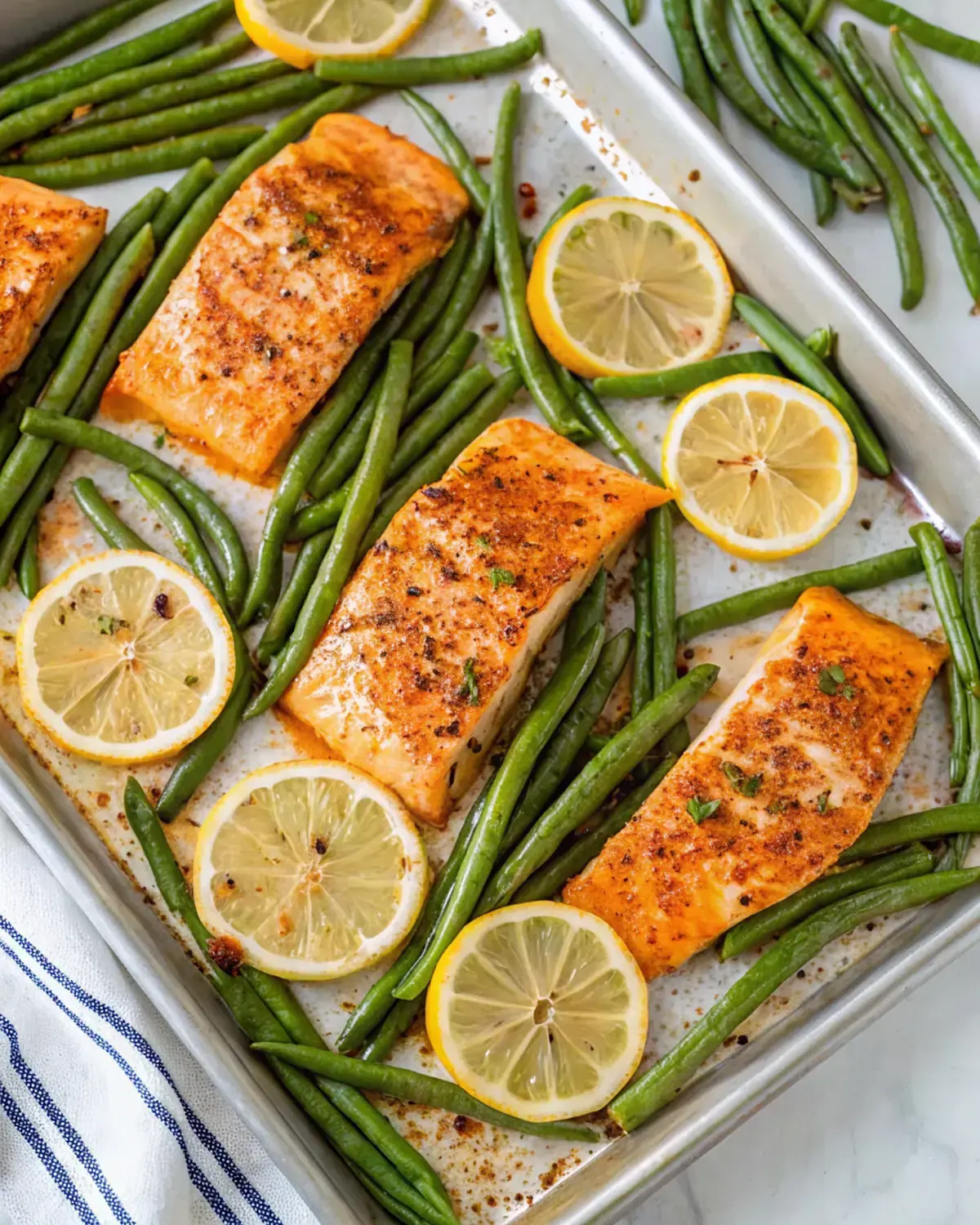
I needed dinner on the table before leaving to grab Lily from school, so I cranked the oven and reached for salmon. The potatoes hit the hot pan first while I whisked a quick lemon-Dijon situation with garlic. By the time I slid in the green beans and nestled the fish, the kitchen already smelled bright and savory. It all came out juicy in the center with those lightly crisp potato edges we all fight over.
Why You’ll Love This Simple Sheet Pan Salmon Dinner
Two things make this a regular in my kitchen: everything cooks on one pan and the flavors are clean and bright. I can manage dishes and backpacks while dinner mostly takes care of itself.
I first built this for a client who needed more protein without complicated steps. Now Ryan and the kids know the drill: salmon in the middle, veggies flanking, lemony glaze on top.
What Makes this Recipe Unique
– Smart sheet-pan flow: Potatoes go in first so they start crisping, then beans and salmon join for perfect timing.
– Lemon-Dijon glaze: Zest, juice, Dijon, olive oil, and garlic bring tangy, savory balance without any extra sauce.
– Protein-forward salmon: Salmon is the anchor here, delivering a solid protein bump that actually tastes great.
– Texture control: Roast until flaky, then a quick broil if you want that crackly skin.
– Pan juices as finish: The lemony drips on the pan get spooned over everything for extra flavor.
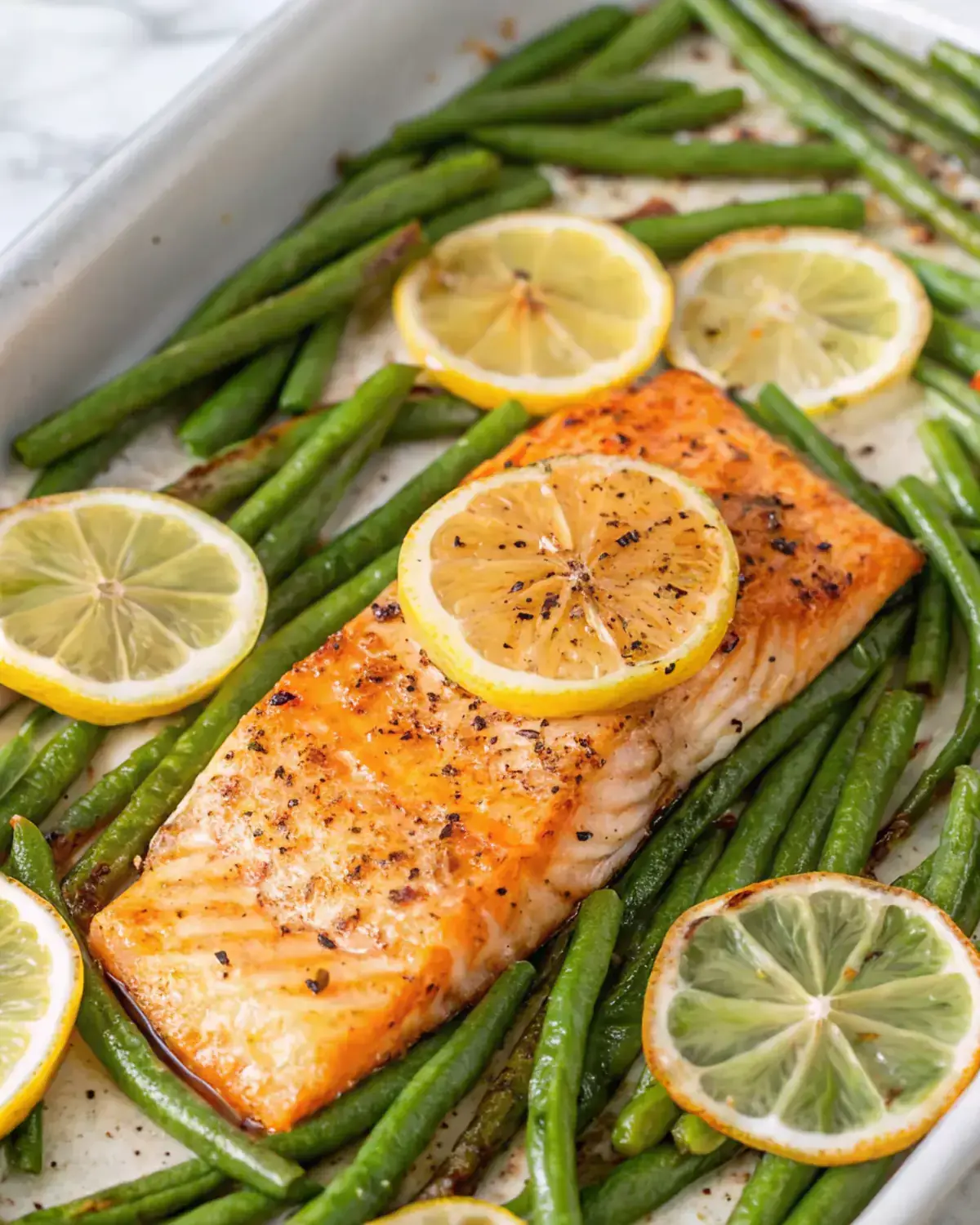
Estimated Macros & Calories
Here’s a realistic snapshot of the nutrition based on the ingredients used. (estimated per serving, without optional ingredients)
- Calories: ~600
- Protein: ~43 g
- Carbohydrates: ~36 g
- Fat: ~31 g
- Fiber: ~7 g
The Most Authentic Simple Sheet Pan Salmon Dinner Recipe
This is my go-to when I want a balanced, protein-centered dinner with minimal cleanup. The glaze is punchy, the veggies are tender with a little bite, and the salmon stays silky.
Ingredient Notes
– Salmon fillets: The main protein; patting them dry helps the glaze cling and keeps the surface from steaming.
– Dijon mustard: Adds tang and body to the glaze; don’t skip it because it ties the lemon and garlic together.
– Olive oil: Splits between the glaze and vegetables; it promotes browning and keeps the salmon juicy.
– Garlic: Minced for even flavor; keep it in the glaze so it doesn’t burn on the pan.
– Lemon (zest and juice): Zest first, then juice; the zest gives a fragrant pop you won’t get from juice alone.
– Yukon Gold potatoes: Their creamy texture holds up to roasting; cut them evenly so they cook at the same pace.
– Green beans: Trimmed so they roast evenly; they add fresh crunch next to the richer salmon.
– Kosher salt and black pepper: Season in layers; a light hand on the salmon lets the glaze lead.
– Fresh parsley: Sprinkled at the end for color and a clean, fresh finish.
Instructions
Step 1: Preheat and Prep the Pan
Set the oven to 425°F. Line a large rimmed sheet pan with foil or parchment and lightly oil the surface so the vegetables don’t stick.
Step 2: Season Potatoes and Start Roasting
Toss the diced potatoes with olive oil, salt, and a few grinds of black pepper. Spread them on one side of the pan in a single layer and get them roasting so the edges begin to crisp.
Step 3: Whisk the Lemon-Dijon Glaze
While the potatoes get a head start, whisk together the Dijon, olive oil, lemon zest, lemon juice, and minced garlic. Taste and add a small pinch of salt if you think it needs it.
Step 4: Toss Green Beans and Make Space
Combine the trimmed green beans with the remaining olive oil and a light pinch of salt and pepper. Slide the potatoes over to make room for the beans and salmon.
Step 5: Add Salmon and Brush with Glaze
Nestle the green beans on the empty side of the pan. Pat the salmon dry, set it skin-side down in the center between the potatoes and beans, and brush the tops generously with the lemon-Dijon glaze.
Step 6: Roast and Optional Broil
Return the pan to the oven and cook until the salmon reaches about 125–130°F and flakes easily with a fork. If you like crisp skin, switch to broil briefly at the end and watch closely so it doesn’t burn.
Step 7: Rest and Finish
Let the salmon rest for a few minutes so the juices settle. Sprinkle the whole pan with chopped parsley and a little extra lemon zest, then divide the salmon, potatoes, and beans and spoon any pan juices over the top.
Tips and Mistakes to Avoid
– Don’t crowd the potatoes. Give them breathing room so they brown instead of steaming.
– Zest before you juice the lemon. It’s much harder to zest a squeezed lemon half.
– Pat the salmon dry. Moisture on the surface keeps the glaze from sticking and can make the fish feel soggy.
– Keep an eye on the broiler. It goes from golden to too dark very quickly.
– Season the veggies in a bowl first. Tossing on the pan can leave patches of over-salted bites.
Storage Tips
– Refrigerate leftovers in airtight containers; they keep well and taste great the next day.
– Cooked salmon can be frozen; thaw gently in the fridge before reheating.
– Reheat in the oven or a skillet to revive texture; a quick microwave works in a pinch but go low and slow.
– For meal prep, portion salmon, potatoes, and beans with a spoonful of pan juices in each container for moisture.
Variations and Substitutions
– Higher protein focus: serve a larger portion of salmon and go lighter on the potatoes.
– Lower-carb angle: load up on green beans and reduce the potatoes.
– Vegetarian night: skip the salmon and glaze the vegetables instead, then roast until tender and lightly browned.
– Texture tweak: broil at the end for crisper salmon skin and deeper browning on the veggies.
Why This Recipe Is The Real Deal
The staggered roasting is the quiet hero here: potatoes get a head start, then beans and salmon join so everything finishes together. The lemon-Dijon glaze gives you bright flavor without any heavy sauce.
Personally, I love how the salmon stays flaky and moist while the beans keep their snap. It’s a simple technique that respects each ingredient and still gets dinner done with minimal fuss.
The Bottom Line
If you’re after a no-drama dinner that delivers real protein and real flavor, this sheet pan combo earns a spot in your rotation. Try it, then tell me how your crew liked it in the comments.
Daisy Hartmann, RDN
Founder of GoProteinEats.com
Making high-protein eating simple, delicious, and sustainable for real life.

Simple Sheet Pan Salmon Dinner
Ingredients
Salmon & Glaze
- 1.5 lb salmon fillets (skin on if possible) about 4 fillets
- 1 tbsp Dijon mustard
- 1 tbsp olive oil for the glaze
- 2 garlic cloves, minced
- 1 lemon zest and juice
Vegetables
- 1.5 lb Yukon Gold potatoes cut into 1/2-inch pieces
- 12 oz green beans, trimmed
Pantry & Seasonings
- 2 tbsp olive oil for potatoes and beans
- 1 tsp kosher salt divide between vegetables and salmon
- 1/2 tsp freshly ground black pepper
- 2 tbsp fresh parsley, chopped for finishing
Instructions
Preparation Steps
- Preheat the oven to 425°F. Line a large rimmed sheet pan with foil or parchment and lightly oil the surface so vegetables don’t stick.
- Toss the diced potatoes with 1 tbsp of olive oil, 1/2 tsp salt and a few grinds of black pepper. Spread them in a single layer on one side of the sheet pan. Roast for 15 minutes to start crisping the edges.
- While the potatoes roast, whisk together the Dijon, 1 tbsp olive oil, the zest and juice of the lemon, and the minced garlic in a small bowl. Taste and adjust with a pinch of salt if needed — this is the glaze for the salmon.
- Toss the trimmed green beans with the remaining 1 tbsp olive oil and a light pinch of salt and pepper. After the potatoes have had 15 minutes, move them to one side of the pan to make room.
- Nestle the green beans on the empty side of the pan. Pat the salmon fillets dry and place them skin-side down in the center space between the potatoes and beans. Brush the tops of the salmon generously with the lemon-Dijon glaze.
- Return the sheet pan to the oven and roast everything for 10–12 minutes, or until the salmon reaches about 125–130°F and flakes easily. If you like crisp skin, switch the oven to broil for 1–2 minutes at the end — watch closely so it doesn't burn.
- Remove the pan and let the salmon rest for 3–5 minutes. Sprinkle the whole pan with chopped parsley and a little extra lemon zest before serving. Divide salmon, potatoes and beans among plates and spoon any pan juices over the top.